คำตอบสั้น: ลดเวลาหยุดผลิตของงานทำความสะอาดระบบระบายอากาศได้โดยย้ายความไม่แน่นอนออกจาก shutdown: สำรวจ route/access ล่วงหน้า จำแนกสิ่งสะสม แยก cleaning/repair เตรียม permit–LOTO–spare–waste และกำหนด hold point/ผู้อนุมัติให้พร้อม การลดขั้นตอนตรวจ ความปลอดภัย หรือ drying ไม่ใช่การลด downtime แต่เป็นการย้ายความเสี่ยงไปช่วง start-up
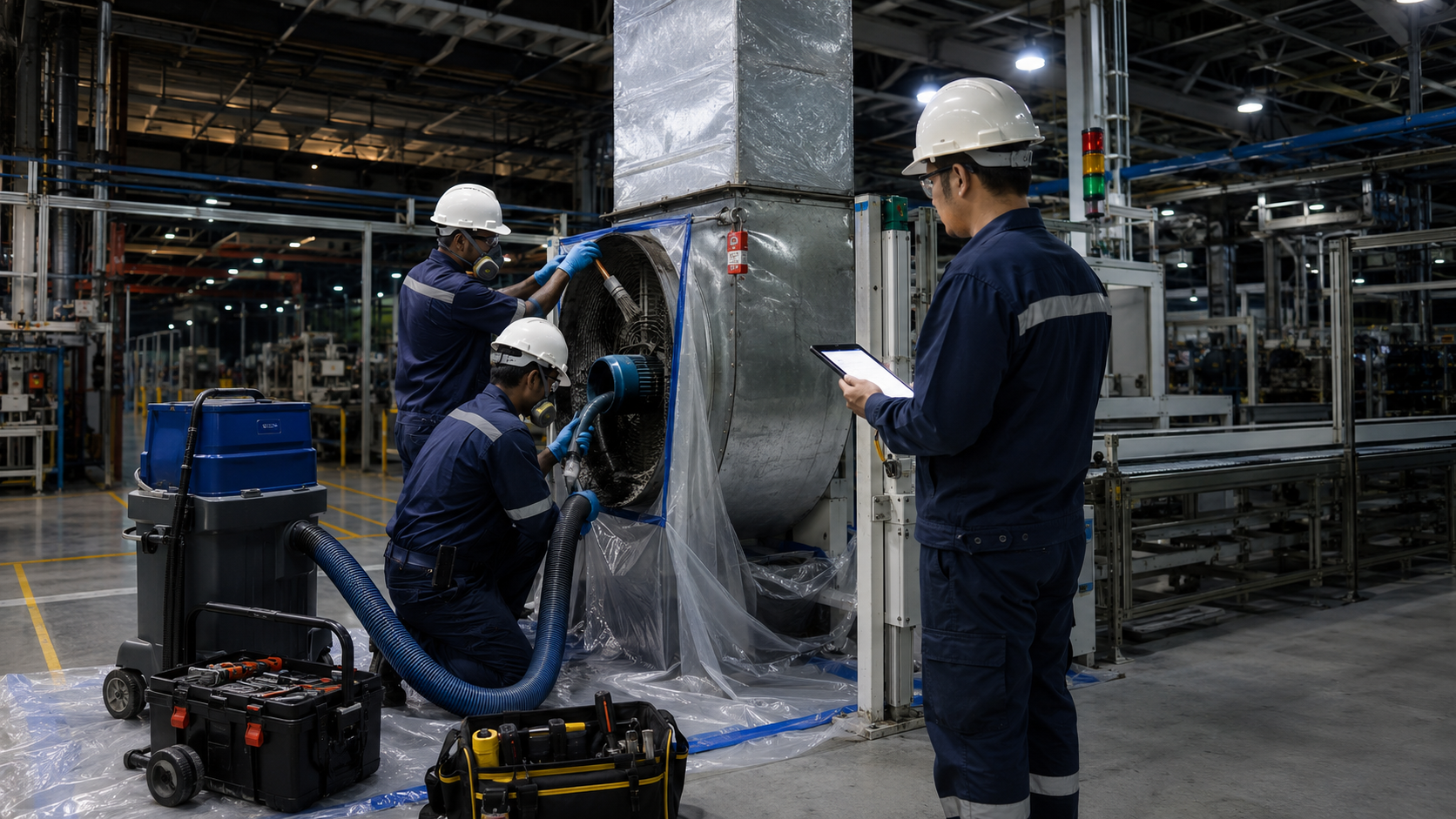
คู่มือนี้ช่วยฝ่ายผลิต ซ่อมบำรุง EHS จัดซื้อและผู้รับเหมาออก shutdown plan สำหรับโรงงาน ไม่แทน process-specific contingency, MOC, emergency plan หรือข้อกำหนดคุณภาพของผลิตภัณฑ์
Downtime มี 8 ช่วง
| ช่วง | Critical activity | ทำล่วงหน้าได้หรือไม่ |
|---|---|---|
| Production rundown | หยุด feed/process, cool/purge | วางแผนได้ แต่ทำตาม procedure |
| Isolation | LOTO, line break, zero-energy | เตรียม permit/point list ได้ |
| Access setup | scaffold/lift/opening/containment | บางส่วน pre-stage ได้ |
| Inspection gate | ยืนยัน deposit/material/defect | survey ลด unknown ได้ |
| Cleaning | source removal ราย segment | เพิ่มทีม/แบ่ง zoneเมื่อปลอดภัย |
| Repair/restoration | access, gasket, filter, guard | spare/repair plan ล่วงหน้า |
| Verification | hold point/report/test | shot list/ผู้ตรวจพร้อม |
| Start-up | clearance, run, monitor | checklist/owner พร้อม |
หลักคิด: ลด Unknown ไม่ใช่ลด Control
Unknown ที่ทำให้คืนงานล่าช้า ได้แก่ ไม่มี access, คราบต่างจากข้อมูล, ท่อกัดกร่อน, ของเสียไม่มีปลายทาง, ผู้อนุมัติไม่อยู่, spare ไม่พร้อม และ start-up criteria ไม่ชัด ทุกข้อควรถูกแปลงเป็น pre-shutdown action พร้อม owner/date
4–6 สัปดาห์ก่อนงาน
- กำหนด objective/system boundary และ production window
- walkdown route/height/access/utility และ verified drawing
- เก็บ process/SDS/deposit information และ hazard review
- ตรวจ permit, LOTO boundary, confined-space/height/lifting requirement
- แยก cleaning, repair, inspection/NDT, balancing และ electrical work
- กำหนด waste classification/container/route/disposal
- วาง contingency: access ไม่พอ, corrosion, rain, spare, additional shift
1–2 สัปดาห์ก่อนงาน
- freeze scope map/sequence และ change rule
- ยืนยันคน เครื่องมือ filter/consumable/spare และ calibration
- pre-fabricate access/gasket/cover เมื่อข้อมูลอนุญาต
- จัด laydown/staging, power/water/lighting และ waste area
- ทบทวน SIMOPS และพื้นที่ที่ยังผลิต
- กำหนด hold point/ผู้ตรวจ/ช่องทางอนุมัติทั้งกะกลางคืน
- เตรียม report template/segment ID/shot list
24 ชั่วโมงก่อน Shutdown
ทำ readiness review แบบ go/no-go:
| Gate | Go เมื่อ | No-go เมื่อ |
|---|---|---|
| Scope | drawing/segment/access ชัด | unknown สำคัญไม่มี contingency |
| Safety | permit/LOTO/roles พร้อม | isolation boundary ไม่ยืนยัน |
| Deposit/waste | classification/method/container พร้อม | สิ่งสะสมไม่ทราบชนิด |
| Resources | ทีม tool spare lift พร้อม | critical resource ขาด |
| Acceptance | ผู้ตรวจ/เกณฑ์/start-up owner พร้อม | ไม่มีผู้อนุมัติคืนระบบ |
แบ่ง Zone อย่างไรไม่ให้เพิ่มความเสี่ยง
แบ่งตาม isolation boundary และ process connection ไม่ใช่ตามระยะที่ดูสะดวก ตรวจ shared fan/header/return/collector และ cross-flow หากระบบยังเดินบางส่วน ต้องพิสูจน์ว่าไม่ดูดฝุ่น/สารจากพื้นที่งานเข้าสู่การผลิต และไม่ทำให้ capture อื่นเสีย
งานคู่ขนานที่ทำได้
- คนละ isolated segment และ collection ไม่รบกวนกัน
- cleaning กับ off-line repair ที่แยกพื้นที่/อำนาจ
- report/photo processing ขณะทีมถัดไปทำ segment ใหม่
- scaffold relocation หลัง release zone ตาม permit
- spare preparation และ gasket/panel restoration
งานที่ไม่ควรคู่ขนานโดยไม่มีแผน ได้แก่ hot work กับ combustible residue, production กับ uncontrolled dust disturbance, start-up กับคนยังอยู่ใน danger zone และ wet cleaning ใกล้ electrical work
Critical Path Board ที่ควรเห็นหน้างาน
- Current segment/status
- next hold point และผู้อนุมัติ
- blocker/owner/ETA
- open defect และผลต่อ start-up
- คน/เครื่องมือ/permit ที่ย้าย zone
- latest safe handover time
- contingency trigger และผู้ตัดสินใจ
อย่าปล่อย Repair เป็น Surprise
สำรวจ corrosion, access, gasket, filter, guard, belt และ fastener ก่อนงานเท่าที่ทำได้ จัดรายการ “repair if found” พร้อม unit price/spare/approval limit การค้นพบ defect ไม่ควรบังคับทีม cleaning ซ่อมโดยไม่มีผู้มีคุณสมบัติหรือปล่อย start-up โดยไม่ตัดสินใจ
Hold Point ที่ช่วยลด Rework
- หลังเปิด access: material/deposit/scope confirmation
- หลัง cleaning ก่อนปิด: acceptance + defect
- หลัง restoration: tool/guard/panel/fastener
- ก่อน release LOTO: people/permit/system clearance
- หลัง start-up: alarm/leak/noise/vibration/process indicator
การรอผู้ตรวจที่ไม่อยู่ทำให้ downtime สูงกว่าการตรวจเองไม่กี่นาที จึงต้องกำหนดชื่อ/ตัวแทนและวิธีหลักฐานล่วงหน้า
Metric ที่ควรติดตาม
| Metric | ใช้ปรับปรุงอะไร |
|---|---|
| Planned vs actual shutdown | ความแม่นของ scope/resource |
| Wait time by cause | permit, access, inspector, spare, waste |
| Rework segments | method/acceptance/training |
| Unknown findings | คุณภาพ pre-survey |
| Start-up defects | restoration/hold point |
| Recurrence/trend | PM/source control |
เชื่อมผลกับ แผน PM ระบบระบายอากาศโรงงาน และ 7 สัญญาณตรวจพัดลม เพื่อให้ shutdown รอบถัดไปใช้ข้อมูลจริง
คำถามที่พบบ่อย
เพิ่มคนแล้วลด downtime ได้เสมอหรือไม่
ไม่เสมอ หาก access/permit/collection/hold point เป็นคอขวด คนเพิ่มอาจแออัดและเพิ่มความเสี่ยง ต้องวิเคราะห์ critical path
ทำงานระหว่างผลิตบาง line ได้หรือไม่
ขึ้นกับ isolation, cross-connection, contamination และ process requirement ต้องผ่าน SIMOPS/hazard review ไม่สรุปจากระยะห่าง
ควรเตรียม spare อะไร
จาก survey/manual/criticality เช่น gasket, filter, fastener, access hardware หรือ drive component แต่ต้องแยกผู้รับผิดชอบ repair
ถ้าเกินเวลาเปิดผลิตควรทำอย่างไร
ใช้ contingency/decision authority ที่กำหนด: ขยายกะ จำกัด scope อย่างเปิดเผย หรือ defer segment อย่างปลอดภัย ไม่ข้าม verification/start-up control
สรุป
ลด downtime ด้วย readiness, verified scope, parallel work ที่แยกได้ และผู้อนุมัติพร้อม ไม่ใช่ด้วยการเร่งงานหลังเปิดระบบแล้ว เก็บ wait/rework/unknown data เพื่อทำให้รอบถัดไปสั้นลงอย่างมีหลักฐาน
ดู บริการทำความสะอาดระบบระบายอากาศโรงงาน หรือ ส่ง shutdown window, system map และ permit requirement ให้ VENTCLEAN Thailand ช่วยจัด readiness checklist
แหล่งอ้างอิงหลัก
- US OSHA 29 CFR 1910.147: Control of hazardous energy
- US OSHA: Maintenance Checklist
- NIOSH: Ventilation and engineering controls
- ราชกิจจานุเบกษา: ประกาศกระทรวงอุตสาหกรรม (ฉบับที่ 2) พ.ศ. 2554 ว่าด้วยการควบคุมและบำรุงรักษาระบบป้องกันสิ่งแวดล้อมเป็นพิษ
ตรวจสอบแหล่งอ้างอิงล่าสุดเมื่อ 29 กรกฎาคม 2026 ต้องใช้ process procedure, MOC, permit, กฎหมายและข้อกำหนดของโรงงานจริง แหล่งต่างประเทศเป็นข้อมูลอ้างอิง ไม่ใช่กฎหมายไทยโดยอัตโนมัติ